
Showing posts with label East Side. Show all posts
Showing posts with label East Side. Show all posts
Friday, October 19, 2018

Tuesday, July 17, 2018
First Eastside Scholarship Recipient Now Enrolled at the Downtown Palmer Campus

Congratulations to Terrence Broughton, one of our first Eastside Scholarships recipients! We are so proud to partner with the Eastside Community Development Corporation and the Cigar Factory to support this young man in his dream of working in law enforcement. Terrence is a recent graduate of Burke High School.
Wednesday, May 2, 2018

Tuesday, April 17, 2018
Eastside History Series: Charleston’s Back Yard by Dr. Susan Millar Williams
 |
| Hanover Street Garden, 2012 |
With the East Side fast becoming one of Charleston’s most desirable neighborhoods, it is hard to remember that it was once a place where the city relegated eyesores and polluters. Tanneries released foul odors and noxious liquids into its creeks and marshes. Hogs and cattle were slaughtered at “butcher pens” that supplied meat for the city market. Garbage carts dumped trash in the streets, slowly building up new land from the detritus of life downtown. The city dump, with its flocks of buzzards, gave way to an incinerator that spewed showers of ash. Industrial engines and locomotives alike belched clouds of smoke.
In its
heyday as an upscale suburb, Hampstead, as it was then known, boasted an
expansive park and a handful of palatial homes. It even had a botanical garden,
near the site of the now-vacant grocery store many Eastsiders still think of as
the Piggly Wiggly.
But for almost
a century, Hampstead was also the place where Charleston warehoused its poor.
The City Almshouse once occupied the corner of Columbus and Drake Streets,
where the former Wilmot J. Fraser Elementary School now stands. The building
was not originally designed to house unfortunate people. Like the structure we
now know as the Cigar Factory, it was built as a textile factory, with a
central tower and open floors to accommodate spindles and looms. When that
first textile factory went broke, only a few years after it opened, the
building was repurposed to provide board and lodging for people too old or too
sick to support themselves.
The
Almshouse was, at least for its time, a benevolent institution. Outside of the
city, there was no official provision for helping what one nineteenth-century
writer bluntly called “the lame, the halt, the blind, and the poor.” In spite of a rule that required
six months residence inside the city limits in order to qualify for free care,
it was not uncommon for rural people to come to town and beg the authorities to
admit them to the Almshouse or the city hospital. But as Walter J. Frazer points out in
his book Charleston! Charleston!, the
Almshouse was also a place where people deemed “unworthy” were punished for the
crime of being poor. It was governed by a Master and a Matron, and the
residents were referred to as “inmates.” There were a lot of women among the
“indoor pensioners,” some of whom were pressed into service to care for
motherless infants, and in the years after the Civil War there were a fair
number of disabled Confederate veterans. The Almshouse also distributed food to
nonresidents, who were called “outdoor pensioners.” The “rations” were pretty
basic—rice, grits, sugar, flour, maybe a little bacon. But they helped tide
families over from one week to the next.
The
Almshouse served only white Charlestonians. Black paupers were sent to an even
grimmer institution on the other side of town.
 |
| The Almshouse after the earthquake. |
At
9:06 on the night of August 31, 1886, a tremendous earthquake rocked
Charleston, bringing down the central tower and shattering some of the walls.
The master and matron managed to get all one hundred
terror-stricken residents out of the building safely, even though many were, as
the City Yearbook crudely put it,
“cripples and imbeciles.” In addition to providing temporary shelter for the
displaced. the city
was faced with the huge task of repairing or replacing most public buildings,
including the Almshouse. Even with donations pouring in from all over the
nation, the cost was staggering. Committees were put in charge of collecting
bids from contractors and figuring out what to do. And most of the bids came in far higher than
the city was prepared to pay. The Almshouse was no exception.
 |
| Francis S. Rodgers |
Alderman
Francis S. Rodgers proposed that the city buy the venerable Mills House Hotel, on
Meeting Street, downtown, and convert it into a new Almshouse. Once one of the city’s fanciest luxury hotels,
just steps from Hibernian Hall, the Mills House had been used for years as a
boarding and apartment house. It was already laid out with individual rooms and
areas for cooking and dining. It did
have lots of stairs, which would create problems for inmates with mobility
issues. But in other ways, it seemed well suited for use as what we would now
call a residential care facility.
Rodgers
was at the time one of the wealthiest men in Charleston. His brand-new mansion
on Wentworth Street, complete with stained glass designed by Louis Comfort
Tiffany, had survived the earthquake with minimal damage. And as the News and Courier was careful to note, he
had good intentions. But Rodgers’s proposal to move the Almshouse “was received
with a shudder.” A
 |
| The Mills House. (National Archives.) |
“It is very well,” the paper declared, “to
keep the paupers in the background, away off in the outskirts of the city,
where there is plenty of land to cultivate, and where the sad spectacle of
broken-hearted poverty may not offend the vision of those who sit down in their
own comfortable homes.” In other words, the poor belonged in Charleston’s back
yard.
City
Council soon voted to repair the original Almshouse. The poor would remain in residence there for
more than half a century, though in 1913 its name was changed to the gentler-sounding
“Charleston Home.”
Monday, February 26, 2018

Tuesday, January 16, 2018
East Side History Series: The East Side and the Railroads

by Susan Millar Williams, Ph. D.
Approaching
the Palmer Campus from East Bay Street, you can’t help but notice the railroad
line along the Cooper River. In fact, most of the time you can’t see the river
at all because the tracks are crowded with auto transport cars tagged with
graffiti.
 |
| Ruins of the Northeastern Railroad station. |
When the
Charleston Museum published a history of the East Side in 1987, they titled it Between the Tracks. The area grew up around railroads that carried
goods and people in and out of the city. There was one passenger depot on Line
Street, one on Mary, and another on East Bay. The Northeastern had a terminal
on Chapel Street, which burned during the evacuation of Charleston in 1865.
 In the
early twentieth century Union Station was built at the foot of Columbus Street,
more or less where we now see all those outgoing BMWs.
In the
early twentieth century Union Station was built at the foot of Columbus Street,
more or less where we now see all those outgoing BMWs.
There were
also lots of buildings on the East Side where railroad workers performed repair
and maintenance. Other businesses, like Eason Iron, which once stood at the
corner of Columbus and Nassau Streets, produced parts and engines for the
railroads. Boarding houses and rental properties in the area catered to the
hundreds of railroad workers who shoveled coal, greased engines, handled
baggage, loaded freight, and did whatever else it took to keep Charleston and
its port connected with the nation’s interior. A company called Wharton and
Petsch produced boxcars and platform cars, employing machinists, carpenters,
finishers, and blacksmiths who made good wages.
 |
| Robert Smalls |
In order
to ship those goods in and out, the railroads had to connect with the ships
docked at wharves further south. But then as now, people who lived and worked
downtown were wary of noise and pollution, including, in the early years,
sparks thrown off by the steam driven engines. They fought to keep the rail
lines north of what is now Calhoun Street. That meant that in order to transfer
freight from ships to trains, or from
trains to ships, the goods had to be unloaded, loaded onto drays (horse-drawn
wagons), driven several miles, unloaded, and reloaded.

Enterprise Railroad, as depicted on its letterhead.
|
In 1870, South
Carolina representative Robert Smalls joined with three other black
legislators, Joseph Rainey, Richard Cain, and Alonzo Ransier, and other
investors to form a company called the Enterprise Railroad, which would move
goods between the wharves and the railroad depots in horse-drawn cars that ran,
like trolleys, on tracks. The Enterprise is said to have been the only United
States railroad ever under black ownership.
The East
Side is still a major hub of rail and sea transport, though shipping containers
now dominate the landscape and the steam and horse power of earlier years have
given way to fossil fuels.
Monday, November 27, 2017
Celebrate our Pillars of Palmer: Eastside Day Video and Library Archive Now Available
Palmer Campus in Downtown Charleston, South Carolina celebrated its 2017 Eastside Day Celebration during Spirit Week at Trident Technical College by recognizing retirees, college faculty and community allies by naming them as Pillars of Palmer for significant contributions to the college and the Eastside community. Listen to their stories regarding what the recognition meant to them. The videos and photographs of the honorees were produced by Trident Technical College students in the Film, Media and Visual Arts Division.
Tuesday, November 21, 2017
Celebrate our Pillars of Palmer: See the New Portriat Gallery

You can see our new portrait gallery honoring our Pillars of Palmer - faculty, staff, and community members who have contributed to the college and to the community. You can see the physical exhibit by visiting our Library Commons on the Palmer Campus, and you can also read about it in our online exhibit.
Honoring the Past: Gerald Mackey
We here at Trident
Technical College seek to honor the past, for knowing where you come from helps
you get where you’re going. Gerald Mackey embodies the history of these
buildings we move through today. He started his career teaching African
American students in the segregated CA Brown High School that created this
campus. When Trident Technical College bought the building for its downtown
campus, he eventually ended up running it. The TTC downtown Palmer Campus grew
under his leadership.
Preserving for the Future:
Dr. Susan Millar Williams and Mary Edwards
We here at Trident
Technical College also work to preserve the past and the present for the
future. We see ourselves as stewards of the land, the buildings, and the
memories of the people who move through them. Our next two honorees serve as our
most prominent recorders of the history of this campus and the community around
it.
Dr. Susan Williams reads, writes,
and talks about our local history, making what has been invisible, visible. She
has published numerous books and articles, worked on documentaries, and given
lectures on local history. She charts the landscape of memory, and encourages
others to do the same.
Mary Edwards lives in
the Eastside, and knows it like few others. She was also a graduate of CA Brown
High School. She brought that knowledge with her to Trident Technical College,
enriching the development of Eastside Day and other community projects. She
gives voice to her community within the walls of the academy, representing and
honoring those who came before her, and paving the way for those who will
follow.
Connecting the Community: The Presidents, former and present,
of the Eastside Community Development Corporation
If you want something
done in the Eastside, you need to talk to the Eastside Community Development
Corporation. We at Trident Technical College strive to be a part of the
community we serve, and our strongest partner has been the Eastside Community
Development Corporation. They came in
our gates, and got us outside those gates. They help us make the gates
irrelevant. These presidents serve their community, creating programs,
organizing events, supporting businesses, and fostering education. We honor the
work this organization has done, and the people who helped make it happen.
Monday, November 20, 2017
Celebrate our Pillars of Palmer: Library Archive Now Available

Created by Maureen Myers and her staff in the Palmer library, the Eastside Collection stands as an important research guide for students writing about their local community as well as for faculty developing curriculum that includes local history. It also allows us to celebrate the work of our faculty, staff, and students in doing research, sharing community resources, and educating the public about the importance of the Eastside community. And it helps to demonstrate Trident Technical College's commitment to the community it serves.
Tuesday, November 14, 2017
Eastside History Series: Cigar Boxes
by Dr. Susan Millar Williams

Growing up in Arkansas in the 1960s, I
thought of cigar boxes as a real treasure, and I often begged the local
drugstore to let me have their discards. Most of the ones I managed to get hold
of were made from cardboard printed to resemble wood grain, and they had once
held Roi-Tans, which sold for five cents each. Little did I
know then that I would someday work in Charleston, right across the street from
the building that once housed the American Tobacco factory, where those boxes (and
the cigars they contained) were made.
 One
of the most famous brands associated with the factory was called the Cremo, and
it gave the factory its local nickname, Cremo College. Roi-Tans and Cremos were
marketed as more sanitary than other brands because they were made by machine
and pre-drilled so that the smoker did not need to bite off the tips.
One
of the most famous brands associated with the factory was called the Cremo, and
it gave the factory its local nickname, Cremo College. Roi-Tans and Cremos were
marketed as more sanitary than other brands because they were made by machine
and pre-drilled so that the smoker did not need to bite off the tips.
Most boxes were designed to
double as counter displays, so that merchants could prop them open like this and
sell the contents individually.
 Both the cigars and their boxes were
manufactured on site at the Charleston factory, the boxes at the end of the
building now occupied by Garden and Gun
magazine. I ordered this one, which is made of cedar, on E-Bay. You can see the
grain of the wood in this shot, along with the logo.
Both the cigars and their boxes were
manufactured on site at the Charleston factory, the boxes at the end of the
building now occupied by Garden and Gun
magazine. I ordered this one, which is made of cedar, on E-Bay. You can see the
grain of the wood in this shot, along with the logo. 
 The Revenue Act of 1864 required that all
cigars be packed in boxes. On the back of my box is a revenue stamp
that links it to the Charleston factory (on the right).
The Revenue Act of 1864 required that all
cigars be packed in boxes. On the back of my box is a revenue stamp
that links it to the Charleston factory (on the right).
These men (to the left) are posing in front of the Charleston
factory not long after the turn of the century, along with huge cedar logs that
were once used to make cigar boxes. The finest were made of Spanish cedar,
though others were made of other woods, including poplar, sometimes with a thin
veneer of cedar. Most were fastened together with small nails, and printed
paper trim was pasted on.
Friday, September 1, 2017

Wednesday, August 23, 2017
Eastside History Series: 2 Amherst St.- The Belser House (also known as Presqu'le)

We know that this handsome Adam-style house was built between 1802 and 1808 by someone whose last name was Belser, but it’s not clear whether his first name was Jacob or Christopher. It has come to be known as the Christopher Belser House, and also as Presqu’ile, a French word that means peninsula. It may have been designed by Gabriel Manigault, but again, no one is positive.
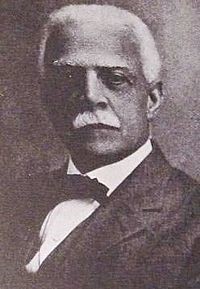 |
| Archibald Grimke |
Another of
Henry and Nancy’s sons, Francis James Grimké, became a Presbyterian minister and helped found the NAACP.
The third son, John, moved to Florida and cut off ties with his family.
 |
| Sarah and Angelina Grimke |
 |
| Stair Tower, Historic American Survey, Library of Congress |
As far as
I can tell, Archibald, Francis, and John never actually lived in this house,
since Henry moved his family to the country after he started having children with
Nancy Weston. However, Henry’s association with Presqu’ile gives the Eastside neighborhood a link to some of
Charleston’s most renowned nineteenth-century authors and activists, and to a
famous twenty-first century novelist. Sue Monk Kidd’s 2014 novel The Invention of Wings explores the
inner lives of Sarah and Angelina and a slave girl, Hetty, who was given to
Sarah on her eleventh birthday.
The Belser
house was damaged in the earthquake of 1886. A photograph by George Cook shows
the stucco fallen from one of the gables, exposing the brick underneath.
 |
| The Belser House in 1958 Historic American Buildings Survey, Library of Congress |
 |
| Spiral Staircase seen from above Historic Buildings Survey, Library of Congress |
Friday, June 9, 2017
Eastside History Series: "Don’t Blame the Weather" by Katharine Purcell, Ph.D.
 |
| Enough Pie’s Wave of Hope installation in front of St. Julian Devine Community Center. |
Want to
know whether you need to pack the car or the johnboat to travel to campus?
American College of the Building Arts professor Christina Butler advises you to
take a look at this map and if any of the streets on your
route had a former life as a tidal creek, then bring a paddle.
Speaking
at Enough Pie’s "Awakening V: King Tide," Butler told an audience at the Cigar Factory on Thursday, May 11, 2017 that
Charleston’s flooding woes are due just as much to early colonial building
practices as they are to current climate change. And in spite of all of the
repairs and new drainage projects, things will only get worse.
 The
problem? Eighteenth-century settlers found very little desirable real-estate on
the peninsula, so they quickly set out to make their own. Anything that could
not be repurposed was tossed into creeks and marshland. That meant that streets
and building sites were created atop animal carcasses, vegetable material,
human and construction waste, and even the corpses of British and Hessian
soldiers! All of the land east of East Bay Street and north of Market Street
rests on this great garbage dump, including the Hampstead area where Palmer now
stands. Needless to say, in those days, ships arriving to the city could smell
it before they could see it.
The
problem? Eighteenth-century settlers found very little desirable real-estate on
the peninsula, so they quickly set out to make their own. Anything that could
not be repurposed was tossed into creeks and marshland. That meant that streets
and building sites were created atop animal carcasses, vegetable material,
human and construction waste, and even the corpses of British and Hessian
soldiers! All of the land east of East Bay Street and north of Market Street
rests on this great garbage dump, including the Hampstead area where Palmer now
stands. Needless to say, in those days, ships arriving to the city could smell
it before they could see it.
And who
was responsible for hauling and spreading the debris? Butler says that enslaved
West Africans did much of the work. This onerous task was ongoing, as each tide
pulled the fill into the harbor--so much so, that dumping regulations were soon
put into place so that shipping lanes would not be blocked.

West
African sweat and labor built much of the land in Charleston, and West African
ingenuity was used to keep it in place. Early drainage engineering first
employed on the peninsula was based on the trunk systems used in rice
cultivation, and by the 1850s, brick and mortar versions were buried beneath
the city streets. In fact, we are still depending upon those nineteenth-century
tunnels to keep our feet dry.
Unfortunately,
those tunnels and the more recent pump projects are still resting on an
unstable 300-year-old garbage dump. Add to that, the booming construction
business on the peninsula and the rising global tides might make us all wish we
were sporting gills.
Tuesday, April 18, 2017
East Side History Series: Faber-Ward House 631 East Bay
 |
This
photograph was taken on May 17, 1958 as part of the Historic
American Buildings
Survey. The building then was in a sad state of disrepair.
|
by Susan Millar Williams, Ph D.
Built in the 1830s by rice planter Henry Faber, this grand house was—like its neighbor across the street, Presqu'ile—built on a spit of high land along the river. Its uses since that time reflect Charleston’s turbulent history. Faber died at age 57 and was buried in St. Philip’s churchyard. His brother Joseph completed the house. Then he sold it to Joshua John Ward, sometimes called “the king of the rice planters.” Born at Brookgreen Plantation near Georgetown in 1800, Ward was the largest slaveholder in America during his lifetime. He was considered the greatest and most innovative of the antebellum rice planters, developing a long grain version of the famous Carolina Gold variety which, during its brief heyday, commanded the highest price of any type of rice on the world market. He also served as Lieutenant Governor of South Carolina from 1850 to 1852. Ward also (briefly) owned Presqu’ile, which is also known as the Christopher Belser house.
 |
Joshua
John Ward
|
 |
The house as it looks today.
|
The Historic Charleston Foundation bought the house in 1964. In 1969 it was set on fire by vandals, but the building survived. Today the main structure and its outbuildings are used as office space.
Want to take a quick look inside and see the spiral staircase that soars up to the cupola? Click on this YouTube video or watch at the top of the article.
Friday, February 24, 2017
Monday, January 23, 2017


Friday, January 20, 2017
Eastside History Series: Denmark Vesey and the African Church

On the corner of Hanover and Reid
Streets once stood an institution called the African Church. The building first
opened its doors in 1818, after hundreds of black Methodists resigned from
existing churches and formed a new congregation in protest over white attempts
to control them. Morris Brown, whose
memory lives on in Charleston through the African Methodist Episcopal church
that now bears his name, was one of the founders.
In 1822, a number of members of the
Hampstead church were arrested for plotting to seize arms and kill slaveholders,
including Denmark Vesey, a former slave who had won enough money in a lottery to
purchase his freedom. In the trial that followed, the words “he belongs to the
African Church” were repeated over and over. Vesey and thirty-four other men
were executed and the church was burned to the ground.
Wednesday, November 9, 2016
Eastside Produce Stand Open on Saturdays in Hamstead Square

You can now buy fresh produce from local farmers on Hampstead Square on Saturdays from 3:00 until dark. The Post and Courier reported that the city of Charleston opened "Eastside Produce @ Hampstead Square" on Saturdays so that many downtown residents can again have easy access to groceries within walking distance. Many in the peninsular neighborhood were left without a grocery store after Bi-Lo's sudden closure earlier this month." You can read more at the Post and Courier article, "City of Charleston Launching Produce Stand to Fill Bi-Lo's Void"
Monday, October 31, 2016
East Side History Series: Bischoff’s Square

The row of four more-or-less identical houses that line Columbus Street across from the Cigar Factory were built in the 1880s as part of Bischoff’s Square, a subdivision created and financed by Jennie Bischoff. There are also at least four of these houses still standing along Drake Street, and two on East Bay. Mrs. Bischoff, the widow of Henry Bischoff, lived in an older, grander home which was located on the same block as the Josiah Tennent House. (That structure, called the Tucker House, is long gone.)
 Mr. and Mrs. Bischoff were both born in Hanover, Germany, before the Civil War. Like many of his fellow German immigrants, Henry sold groceries and liquor, but he also developed a profitable sideline concocting patent medicines. In addition to the South American herb for which it was named, Carolina Tolu Tonic contained lots of sugar and whiskey, which no doubt made it pleasant to drink, if not particularly healthful. Bischoff took advantage of the relatively new art of chromolithography, invented in Germany, to promote his products. The blog Bottles Booze and Back Stories, includes wonderful images of Bischoff’s whimsical trade cards, which were often collected in scrapbooks by children and ladies.
In 1874, during Reconstruction, Henry bought three rice plantations along the Edisto River near Jacksonboro, South Carolina and renamed them collectively as Rice Hope. He died four years later, in 1878, leaving Jennie to manage his fortune. She invested some of it in these modest but attractive frame single

Subscribe to:
Posts (Atom)